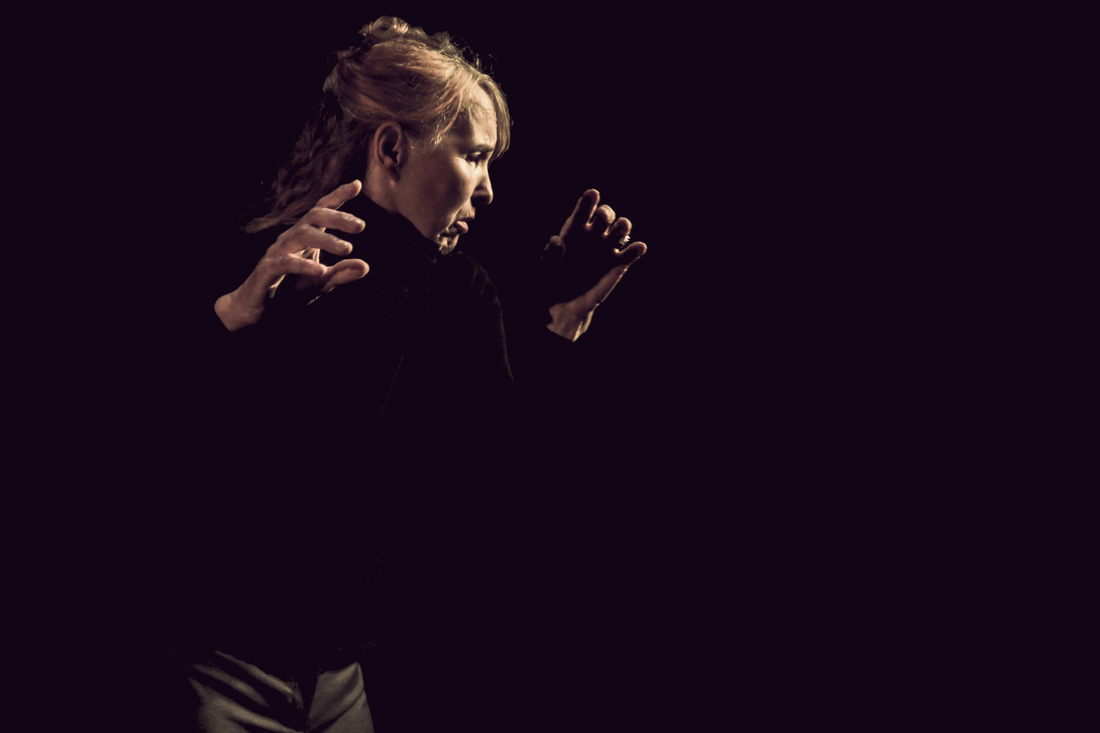
 Pluton – acte 2, photo de Claudia Chan Tak De Pluton – acte 1, je garde un souvenir d’un spectacle tout en douceur. Ce que La 2e Porte à Gauche nous réserve pour ce deuxième mariage de jeunes chorégraphes avec des interprètes plus âgés s’avère toutefois plus corrosif.
Il est étonnant que la pièce de Frédérick Gravel soit celle qui s’aligne le plus avec le premier acte, probablement dû au fait que Paul-André Fortier la danse. Les genoux et les coudes fléchis, il se déplace du côté cour au côté jardin en pivotant, les semelles de ses espadrilles rouges glissant contre le sol. Même s’il épouse le corps recroquevillé de Gravel, ses mouvements sont plus soignés et fluides. Je me rends compte que, jusqu’à maintenant, je ne l’ai vu que dans des contextes où il dansait ses propres chorégraphies, de sorte que j’oublie parfois que c’est Fortier que je regarde parce que je ne reconnais pas sa posture habituelle. Je ne reconnais pas tout à fait la chorégraphie de Gravel non plus, qui se fait ici beaucoup plus doux et subtil. C’est la beauté de ce projet. Catherine Gaudet s’était démarquée avec son solo créé pour Louise Bédard pour acte 1. Il n’est donc pas surprenant de le retrouver ici. Gaudet continue d’y explorer l’un de ses thèmes fétiches, soit la duplicité de l’humain. Bédard est d’abord dos au public en arrière scène, ses expirations flirtant avec les grognements, invoquant simultanément les bébés naissants de Je suis un autre (2012) et les monstres d’Au sein des plus raides vertus (2014). Elle est une bête qu’on cache loin des regards. Ses doigts arthritiques ressemblent plus à des griffes qu’à une main. Lorsqu’elle nous fait face, un sourire se plaque sur son visage tremblotant. Elle veut paraître en contrôle, mais la surface ne peut que craquer, comme toujours chez Gaudet. Ce n’est pas la part animale ou monstrueuse de l’humain qui transparaît ici, mais les troubles de santé physique et mentale. On peut y voir la maladie de Parkinson ou celle d’Alzheimer. C’est à mon humble avis ce que Gaudet a fait de mieux. Après l’entracte, les spectateurs se retrouvent des deux côtés de la scène pour la pièce de Mélanie Demers, un duo pour Marc Boivin et Linda Rabin. Le musicien Tomas Furey s’avance à un micro sur scène, y va d’un « 3, 4 » mais ne chante pas. C’est Boivin et Rabin qui alterne respectivement « New York, New York » et « Let Me Entertain You », rivalisant d’exhibitionnisme performatif. Ils en sont agressants. Comparativement, Furey nous charme avec son silence, nous offrant une sortie de secours essentielle. C’est la pièce la moins séductrice, la plus abrasive de Demers à ce jour. On pourrait dire la même chose de celle de Katie Ward, un solo pour Peter James. Des chaises sont éparpillées sur la scène et les spectateurs sont invités à y prendre place. Soir de première, c’est une vingtaine d’adolescentes qui se sont prêtées au jeu, créant une atmosphère particulière. Pour ceux d’entre nous qui ont été témoins des explosions verbalement violentes de James dans des pièces comme Mygale (2012) de Nicolas Cantin, nous devons nous retenir pour ne pas crier « Ne le laissez pas s’approcher de ces jeunes filles! » Heureusement, nous retrouvons plus le ludisme de Ward marié au minimalisme de James, déjà aperçu dans sa collaboration avec Cantin pour Philippines (2015). En fait, cet opus ressemble plus à du Cantin qu’à du Ward. Aucune illusion ici; James joue avec le théâtre, littéralement, c’est-à-dire avec la salle de spectacle elle-même. Les lumières éclairent tout l’espace. Il secoue la rampe des escaliers, il modifie la lumière à la console d’éclairage, il manipule les rideaux en nous disant, « Ça, c’est vrai. » Il lance une balle contre le mur juste pour nous rappeler que le mur est là, pour que l’espace s’impose plutôt que de s’effacer sous l’effet de la performance. C’est dans ses interactions avec le public qu’on approche de la magie, comme lorsqu’il prétend dévisser un tube invisible du ventre d’une des adolescentes pour ensuite le déposer sur une chaise. « Ce n’est pas nous qui créons la magie, » semble-t-il vouloir dire. « C’est vous, spectateurs. » 28-30 mai à 19h www.fta.ca 514.844.3822 Billets : 40$ / 30 ans et moins : 34$
1 Comment
Je m'entretiens avec le danseur Marc Boivin, lauréat du prix Dora Mavor Moore pour sa performance dans WOULD de la chorégraphe Mélanie Demers. Le spectacle sera présenté cette semaine à l'Usine C. 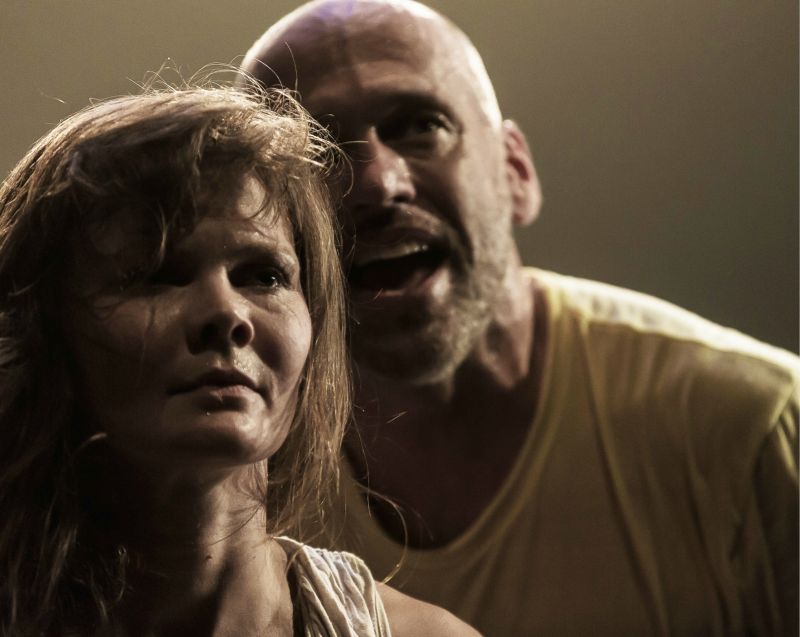 Kate Holden et Marc Boivin dans WOULD, photo de Jeremy Mimnagh 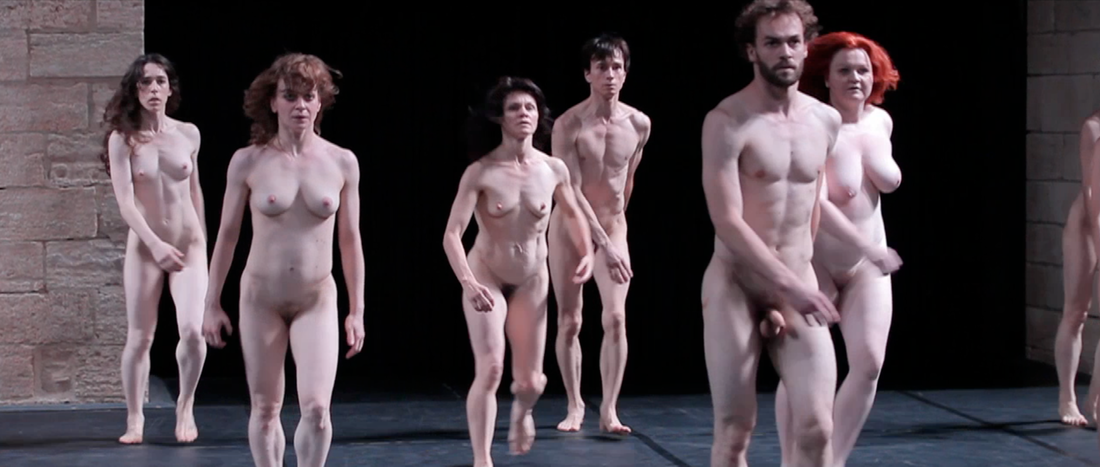 Tragédie d'Olivier Dubois 1. Tragédie, Olivier Dubois (Danse Danse)
Avec son opus pour dix-huit danseurs nus, Dubois a abordé les grands thèmes (le passage du temps, la mortalité, la petitesse de la vie humaine, le rôle de l’art, l’humanité) en prenant son temps, en n’empruntant aucun raccourci facile, en laissant le sens émerger de lui-même. 2. Uncanny Valley Stuff, Dana Michel (Usine C) Avec Uncanny Valley Stuff, Michel a continué sa recherche entamée avec Yellow Towel, spectacle qui figure dans le top dix du magazine new-yorkais Time Out et pour lequel le prestigieux festival ImPulsTanz a créé un prix spécialement pour elle. Sa nouvelle courte pièce est toute aussi incisive mais encore plus drôle. En empilant les clichés sur les Noirs jusqu’à ce qu’ils s’entremêlent et se contredisent, Michel démontre l’absurdité de ces stéréotypes qui nous présentent une vision déformée du monde. 3. Antigone Sr.: Twenty Looks or Paris Is Burning at the Judson Church (L), Trajal Harrell (Festival TransAmériques) Antigone Sr. a probablement été le spectacle de danse qui a créé le plus de divisions cette année. On pourrait diviser le public en trois : ceux qui ont quitté la salle, ceux qui sont restés assis les bras croisés, et ceux qui se sont levés pour danser. Il n’est donc pas surprenant que le spectacle se retrouve dans mon palmarès. Il faut dire que je suis queer et que j’ai une affinité pour la danse post-moderne, ce qui me donne une double porte d’entrée sur le sujet. Pour ceux qui n’ont pas eu l’endurance nécessaire pour passer à travers ce défilé de mode DIY de deux heures, il serait bon de noter que les plus grands bals qui ont inspiré la pièce pouvaient durer jusqu’à dix heures de temps; comptez-vous chanceux! Peut-être comprenez-vous maintenant un peu mieux ce que c’est que de se sentir aliéné par la culture dominante. 4. Monsters, Angels and Aliens Are Not a Substitute for Spirituality…, Andrew Tay (OFFTA) Pour être honnête, lorsque j’ai vu la nouvelle pièce de Tay, qui vire de plus en plus dans le performance art, je me suis demandé si j’étais en train de regarder un artiste perdre la tête sur scène ou si Tay était en contrôle de son art. J’étais évidemment assez intrigué pour découvrir la réponse avec Summoning Aesthetics qu’il a ensuite présenté avec François Lalumière au Festival Phénomena. Conclusion : Tay continue dans la même veine ritualiste, sachant clairement dans quelle direction il va même s’il ne connaît pas nécessairement sa destination. J’ai admiré qu’il ait pris la décision de terminer Monsters sur une note différente de ce qu’il avait prévu pendant la représentation même. La misogynie latente qui avait l’habitude d’hanter ses pièces est disparue. Ce qui demeure est son ludisme, son humour et son ouverture aux expériences, peu importe ce qu’elles s’avèrent être. Si je me souviens bien, un spectateur avait qualifié Summoning Aesthetics « d’honnêteté perverse. » Cela me semble aussi approprié. 5. Built to Last, Meg Stuart (Festival TransAmériques) Avec Built to Last, Stuart (qui a reçu le Grand Prix de la Danse de Montréal) a abordé des thèmes similaires à ceux de Tragédie d’Olivier Dubois, mais de façon beaucoup plus théâtrale. En juxtaposant un immense mobile de notre système solaire avec une maquette d’un tyrannosaure et la danse contemporaine avec la musique classique, Stuart a démontré l’insignifiance des actions humaines et que notre seule rédemption possible se trouve dans l’art. 6. Florilège, Margie Gillis (Agora de la danse) Pour célébrer ses quarante ans de carrière, Gillis nous a offert cinq pièces de son répertoire revisitant les années 1978 à 1997. Par le fait même, elle nous a rappelé pourquoi elle est devenue une danseuse de telle renommée. L’intangible se manifeste à travers son corps, soulignant la fragilité de l’humain dans un univers chaotique. 7. Mange-moi, Andréane Leclerc (Tangente) Leclerc a utilisé la contorsion et la nudité pour aborder les relations de pouvoir entre les individus lorsque notre survie dépend des autres. Qu’elle puisse s’attaquer à de telles questions tout en offrant une des pièces les plus sensorielles de l’année démontre l’intelligence de son travail. 8. Tête-à-Tête, Stéphane Gladyszewski (Agora de la danse) Ma réaction à ma sortie de cette pièce de quinze minutes pour un seul spectateur à la fois : on doit donner à Gladyszewski tout l’argent dont il a besoin pour réaliser ses projets. Aucun autre chorégraphe n’arrive à intégrer la technologie avec autant d’adresse. Tête-à-Tête était à la fois intime, inquiétant et magique. 9. The Nutcracker, Maria Kefirova (Tangente) L’excentrique Kefirova a troqué l’écran vidéo pour des haut-parleurs et a démontré qu’elle maîtrise le son avec autant de flair que l’image. « Elle n’utilise pas le son pour meubler le silence comme le fond maints spectacles, mais pour matérialiser l’invisible, » disais-je. Difficile d’oublier la satisfaction ressentie lors de l’exutoire du tableau final, où Kefirova s’acharne à faire éclater des noix de Grenoble en morceaux en se servant de ses chaussures à talons hauts comme casse-noisette. 10. Junkyard/Paradis remix, Catherine Vidal (Usine C) J’espère avoir assez établi le fait que je suis un fan fini de Mélanie Demers pour pouvoir dire ceci (qui, je crois, n’est pas l’opinion populaire) : Junkyard/Paradis est probablement sa pièce que j’aime le moins. Lors de l’événement MAYDAY remix, où la chorégraphe a laissé des artistes remixer son travail, la metteure en scène Catherine Vidal a donné au spectacle la structure dramatique qu’il méritait avec une fin des plus jubilatoires. 11. loveloss, Michael Trent (Agora de la danse) Extrait de ma critique : « Trent n’a toujours pas peur de prendre le temps qu’il faut. De plus, il évite ici l’humour, le théâtral et le mouvement séducteur (athlétique, rapide, synchronisé), toutes ces astuces que des chorégraphes moins confiants utilisent pour que leur dance soit plus accessible. L’interprétation est sentie sans être affectée. loveloss est une œuvre touchante … » 12. Milieu de nulle part, Jean-Sébastien Lourdais (Agora de la danse) Pour la performance de l’année, celle de Sophie Corriveau, qui s’est méritée la toute première résidence de création pour interprètes offerte par l’Agora de la danse. Notons que le diffuseur s’est démarqué avec une programmation solide pour une deuxième année consécutive.
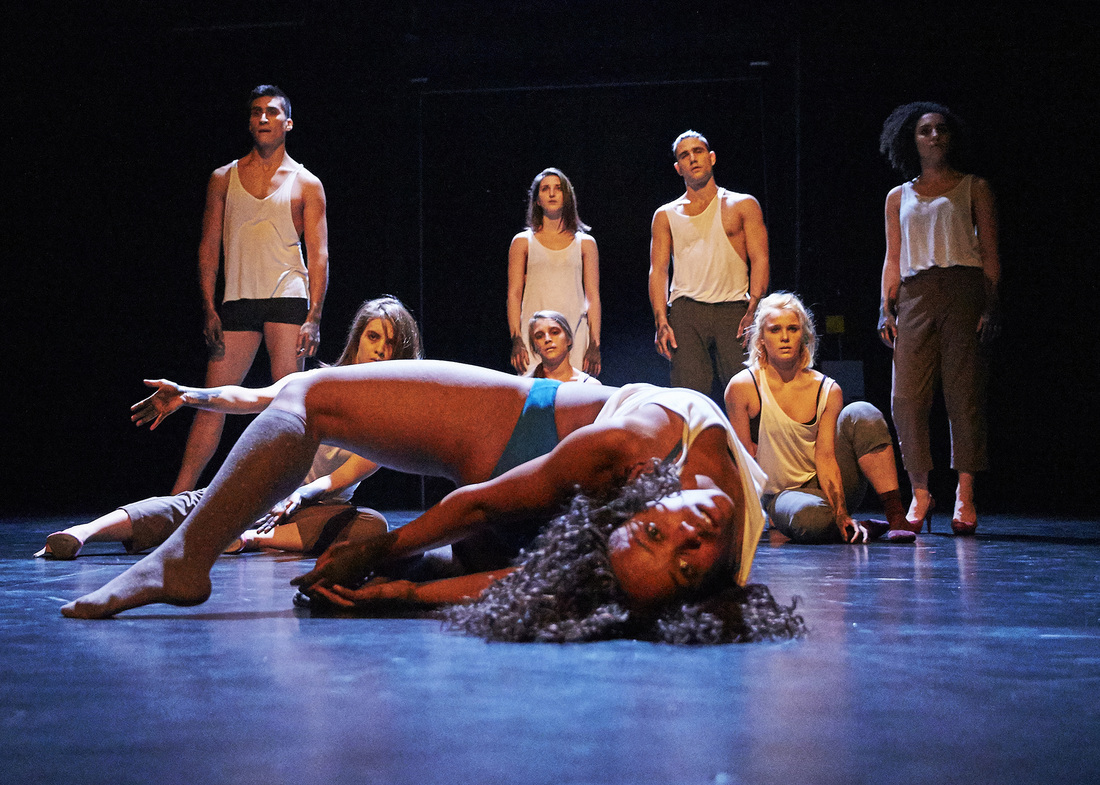
Avec ses images de meute de loups, la pièce n’est pas sans rappeler Clap for the Wolfman de la New-Yorkaise Shannon Gillen. Toutefois, Demers se fait plus subtile. Nulle trace de violence explicite. Si division il y a, elle ne se trouve pas au sein des interprètes, mais plutôt entre eux et nous, le public. Tous habillés de la même façon (camisoles blanches, pantalons foncés et chaussures à talons hauts), ils demeurent presqu’exclusivement dans une position frontale. Il y a eux et il y a nous.
Ils ne semblent par contre pas autant vouloir nous attaquer que de se protéger. La dualité se déploie entre autres dans le mouvement et l’immobilité. La danse apparaît surtout comme l’écroulement de l’individu au sein du groupe plutôt qu’une prise de contrôle. Les talons glissent contre le sol, les mouvements sont conséquemment maladroits et les chutes suivent, révélant la précarité et la vulnérabilité de l’individu. Pendant ce temps, les autres veillent à leur tâche. Ils maintiennent les apparences en demeurant immobiles tout en soutenant notre regard, faignant que tout va bien dans le meilleur des mondes. Leur force réside dans le groupe et ils le savent. Maintes fois, ils nous montrent les paumes de leurs mains, comme pour nous prouver leur caractère inoffensif. « Qui? Moi? » semblent-ils dire. On ferait mieux de se fier à la saleté qui recouvre leurs avant-bras. En dernière partie, nous avons droit à une belle surprise avec Avant les gens mouraient d’Arthur Harel et du collectif français (LA)HORDE (Marine Brutti, Jonathan Debrouwer, Céline Signoret). Avec quinze danseurs sous la main, le dynamisme est inévitablement au rendez-vous et les chorégraphes poussent les choses encore plus loin. Ils explorent le Mainstream Hardcore en réinterprétant les mouvements du Jumpstyle, du Hardjump et du Gabber. On parle d’un bpm entre 150 et 180. Imaginez. C’est donc d’un « 5, 6, 7, 8 » que la danse explose, lui donnant des airs de power cardio. Les brassières de sport et les espadrilles sont de mise. Heureusement, les reprises et remix douteux de chansons pop sont remplacés par les beats incessants de Guillaume Rémus. La chorégraphie suit. On pourrait ici penser à Bertolina de Sharon Eyal. Le mouvement est tout autre, par contre : petits sauts, quarts de tour, un coup de pied ici et là, on crée une boucle et on répète le tout. Les interprètes trouvent quelques moments de répit sur les clôtures de fer en arrière-scène. De là, ils observent la danse en conservant le look le plus butch possible, ayant l’air aussi hard que les acteurs dans Beat Street. Ils assènent l’air de coups de poing avant de se joindre de plus belle à l’action. Cette énergie est maintenue presque jusqu’à la toute fin du spectacle. (LA)HORDE offre ici la transposition sur scène d’une danse communautaire la plus réussie que j’ai eu la chance de voir. 17-20 décembre à 19h30 Théâtre Rouge du Conservatoire www.admission.com 514.873.4031 poste 313 Billets : 18$ / Étudiants : 12$
Prismes de Benoît Lachambre du 2 au 6 décembre (Danse Danse)
Avec l’aide de l’éclairagiste Lucie Bazzo, Lachambre explore à fond les jeux de lumières et de couleurs avec ce spectacle des plus stimulants visuellement. Dans sa tête & Six pieds sur terre de Maïgwenn Desbois du 20 au 21 décembre (Tangente) Avec ses pièces ludiques où elle gigue avec des interprètes ayant le syndrome de Williams et d’Asperger, Desbois nous reflète avec humour notre société capacitiste. Klumzy de Nicolas Cantin du 25 au 27 mars (Usine C) Cantin s’enfonce de plus en plus dans l’antithéâtre avec ce spectacle marquant, une suggestion de biographie de l’interprète Ashlea Watkins où la mise-en-scène de Cantin prend tout autant de place. CEUX DONT LA DERNIÈRE CRÉATION ME DONNENT RAISON D’ESPÉRER Bath House & Cherepaka d’Andréane Leclerc du 21 au 24 octobre (Tangente) Leclerc se sert du corps contorsionniste pour aborder des questions philosophiques et féministes dans des pièces sensorielles. Tête-à-tête de Stéphane Gladyszewski du 8 au 16 novembre (Agora de la danse) Gladyszewski utilise la technologie mieux que quiconque dans le monde de la danse. Pour Tête-à-tête, pièce pour un seul spectateur à la fois, ce dernier doit insérer son visage dans un masque pour voir la performance. Intrigant. Confession publique de Mélanie Demers du 8 au 11 avril (Usine C) Après avoir clos un cycle de pièces de groupe l’an dernier avec MAYDAY remix, Demers plonge dans le vide avec son nouveau spectacle, un solo. Peu de raisons de s’inquiéter; la chorégraphe, drôle et intelligente, ne rate jamais son atterrissage. Wolf songs for Lambs de Frédéric Tavernini du 14 au 18 avril (La Chapelle) Avec son installation chorégraphique Le Tératome, simple et efficace, Tavernini avait créé un univers cliniquement froid et fascinant. Il nous revient avec une autre installation, cette fois explorant l’imaginaire de l’enfance. http://www.dansedanse.ca/ http://tangente.qc.ca/ http://www.usine-c.com/ http://agoradanse.com/ http://lachapelle.org/ 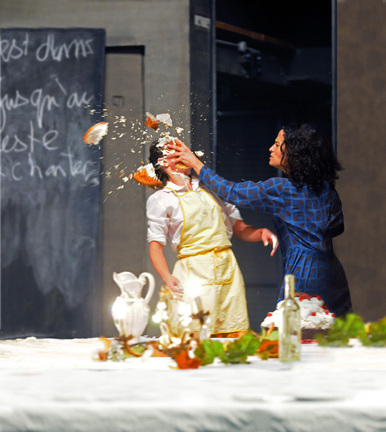 Salves, photo by Jean-Pierre Maurin Salves, photo by Jean-Pierre Maurin Salves, Maguy Marin (Danse Danse) Septembre 26-28
Because last time Marin was in town, it was back in 2007 with Umwelt, which still holds as one of the best shows performed in Montreal this past decade. Prismes, Benoît Lachambre (L’Agora de la danse) October 16-19 Because Lachambre made quite the comeback last year with Snakeskins, his best show in years. Henri Michaux: Mouvements + Gymnopédies, Marie Chouinard (Danse Danse) October 31-November 2 Because Chouinard’s last show, LE NOMBRE D’OR (LIVE), is the one that has had the biggest impact on me since performer Carole Prieur first translated Henri Michaux’s drawings into dance back in 2005. We can only imagine what it will be like when all the dancers of the company will follow in her footsteps. Cuire Le Pain De Nos Corps, Sarah Dell’ava (Tangente) November 21-24 Because Dell’ava is probably the most intelligent mover in Montreal. LA VALEUR DES CHOSES, Jacques Poulin-Denis (Lachapelle) January 21-25 Because Poulin-Denis manages to expose the absurdity of human life while remaining funny and touching. The Nutcracker, Maria Kefirova (Tangente) January 30-February 2 Because Kefirova is one of the few choreographers in Montreal who knows how to deal with video in live performance. The adaptation project, Michael Trent (L’Agora de la danse) February 12-14 Because the last time Trent was in Montreal, he surprised everyone by being as conceptual as he was playful. Reviens Vers Moi Le Ventre En Premier, Annie Gagnon (Tangente) February 27-March 2 Because she’s one of the few choreographers in Montreal who’s not afraid to be serious. Mayday remix, Mélanie Demers (Usine C) March 12-14 Because, with just a few works, Demers has managed to establish herself as one of the most consistently good dancemakers in Montreal and it will be a treat to see her revisit her past works before moving on to the next artistic stage in her career. Mange-Moi, Andréane Leclerc (Tangente) March 20-23 Because Leclerc’s contortionism isn’t just a circus trick; it’s a philosophy that allows her to approach and explore space differently. http://dansedanse.ca/DDA_1314/en/ http://www.agoradanse.com/en http://tangente.qc.ca/ http://lachapelle.org/ http://www.usine-c.com/ 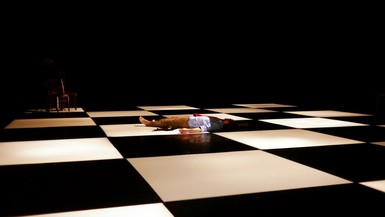 A large checkerboard, a trivial human figure. A large checkerboard, a trivial human figure. The beam of light from a projector appears in front of the viewer instead of just behind. The screen becomes a mirror, reminding the viewer: this is not reality; it’s just a movie. The projector lights up the title, Inland Empire, by David Lynch. At the beginning of Mélanie Demers’s Goodbye, dancer Jacques Poulin-Denis opens with a typical Demers move, a series of statements paradoxical in their juxtaposition: “This is not the show,” he tells us. “Not a flat screen, not reality.” The question that always emerges with Demers is: then what is it? One should never readily believe what the performers are saying. Of course, when Poulin-Denis is claiming, “This is not the show,” he is reminding us of the opposite: this is a show. But does it even matter one way or another? Extreme close-up of a needle on a vinyl record. To say that it’s just music is to undermine the kind of emotional manipulation that art is involved in. 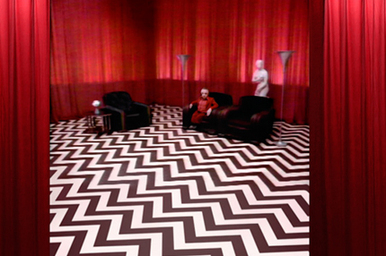 The Black Lodge. The Black Lodge. Even the electric guitar riffs in Goodbye are reminiscent of Lynch, most particularly Angelo Badalamenti’s score for the Twin Peaks series. That’s not to mention the floor, a black-and-white checkerboard of inhuman proportions that dramatizes the space and makes the dancers look trivial, like mere chess pieces. The Black Lodge. A woman watches television, though on it there is nothing but static. Soon, however, the TV image gives way to animated rabbits in their apartment. It could all be in her head. Se faire son cinéma. Do we need to believe that Brianna Lombardo and Poulin-Denis are really a couple to be affected by their dance? Of course not. The moment they interact, the moment they touch, the moment they move together, they enter into a relationship, their actions have consequences. 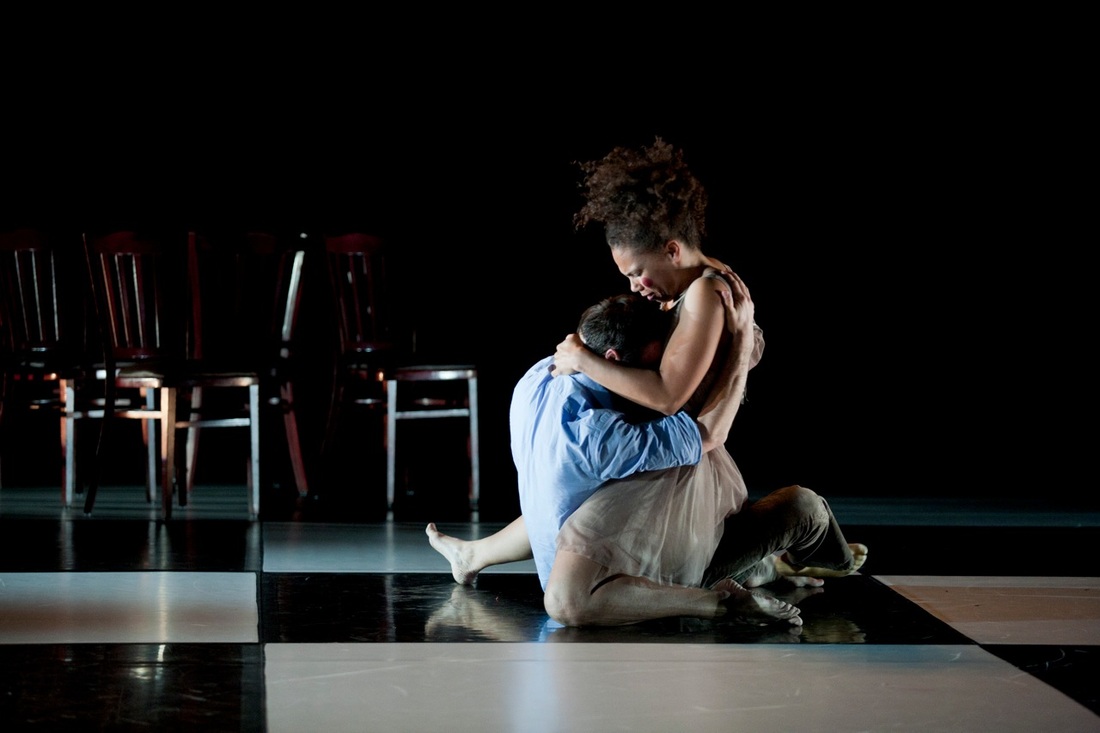 Every action is a performance, every performance has consequences. Photo by Mathieu Doyon. We don’t need to believe that Grace Zabriskie is not Grace Zabriskie. She just needs to walk in, creepy as fuck. If you don’t feel anything, it’s because you’re taking Zabriskie for granted; as real. Suspension of disbelief is a myth. The true power of cinema lies in complete and utter disbelief. 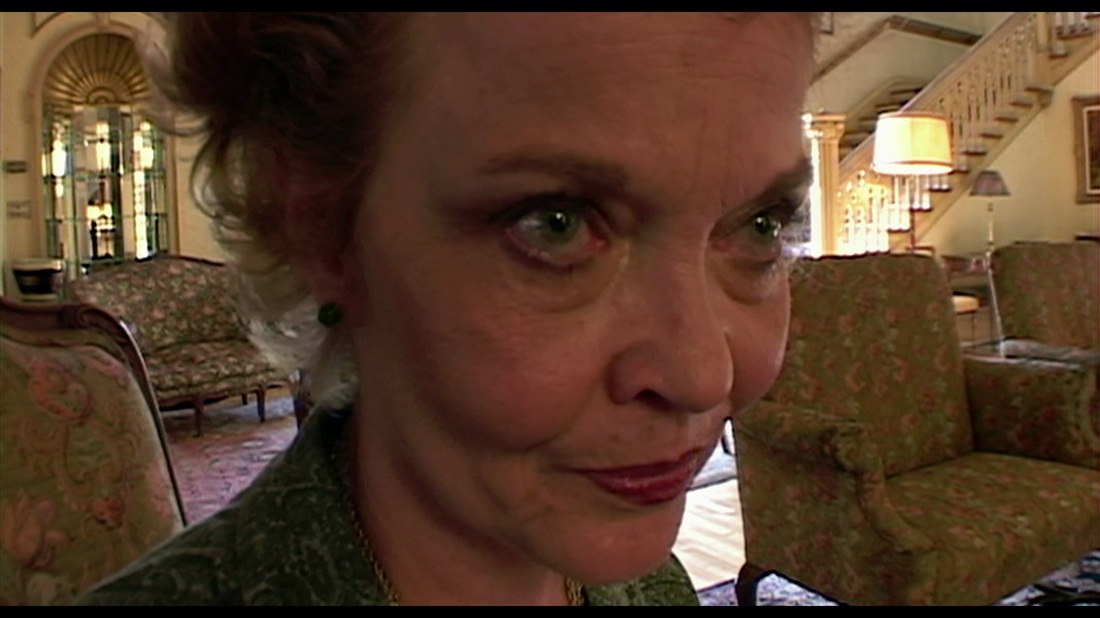 Acting or not, if this face doesn't have an effect on you, there's something wrong with you. Demers is not even trying to pretend. When a performer needs to have tears running down their face, they use eye drops. The microphones they hold are fake, aluminum paper balls on black sticks; the knife, an aluminum paper blade. No one will get hurt. At least not because of objects. No matter how much I hate metaphors, I must recognize that most blades are metaphorical. Artistic ones, always. 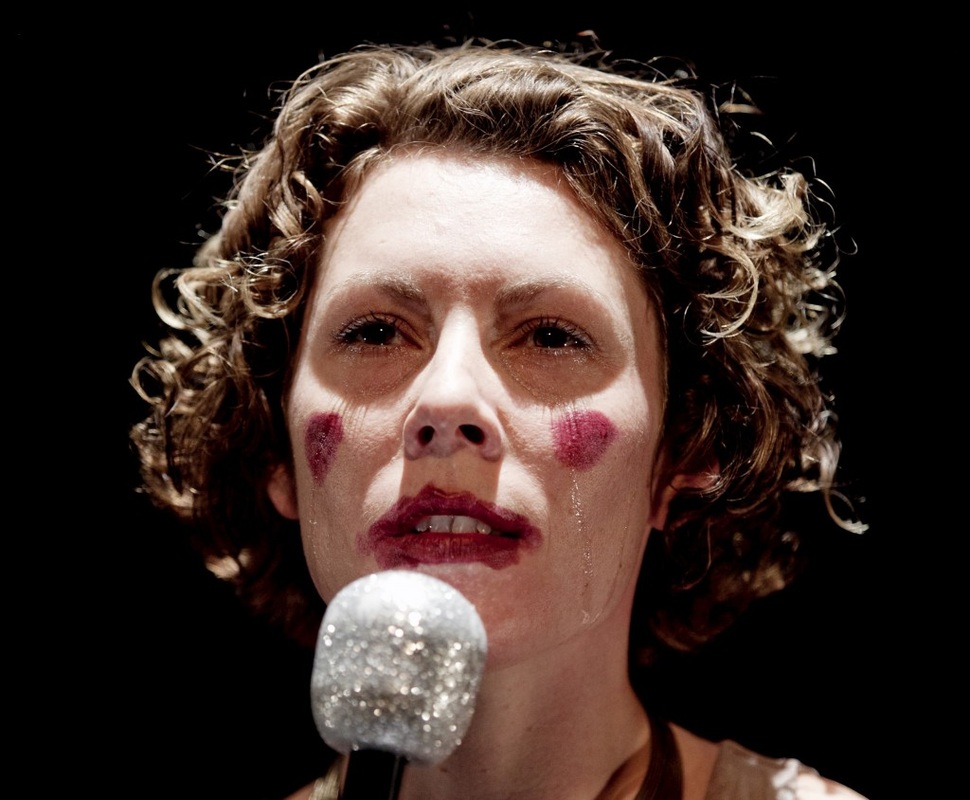 Brianna Lombardo and her clown tears. Photo by Mathieu Doyon. When Laura Dern gets fake stabbed, she runs down Hollywood Boulevard before falling in front of one of the stars from the Walk of Fame. Lynch will not allow you to believe any of it is real. It doesn’t matter. If you are only affected by things that are real, you’re not human. When Poulin-Denis looks up at the audience while Demers is sucking on his nipple, his reaction is to say, “No, no… It’s not what you think. This is not the show.” The statement is of course hilariously ironic. Demers knows that such a strong image is bound to have an effect on the audience. Would it have any less of an effect if we were to take it in as reality? Of course not. Quite the contrary. 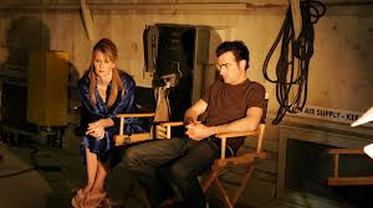 Actors playing actors. Actors playing actors. Whenever Dern and Justin Theroux have a scene together, we never quite know whether they are the actors they are portraying in the movie or the characters the actors are portraying in the movie in the movie. At one point, Dern screams out, “Damn! This sounds like dialogue from our script!” That’s because, of course, it is. First and foremost, and if nothing else, every movie is about people making a movie. Another typical Demers move: when Poulin-Denis is wiping the water off the floor, he is of course doing so for the dancers’ safety; but, by virtue of being performed onstage, the action is also necessarily dramatic. An everyday gesture becomes an artistic one. “Il y a de l’éclairage, des costumes…” he says, laying out the reasons why we might be inclined to think that this is a show. As if those things didn’t exist outside of the theatre… “Is this our set?” Dern asks. She means in the movie in the movie. However, the set only ends up getting used in the movie. Every space is one location scout away from becoming a set. Later, when Poulin-Denis is the one sucking on Lombardo’s nipple, Chi Long shouts, “This is it! This is the show!” Yet the gesture is essentially the same as before. If anything, the gender reversal and repetition (and therefore lack of surprise) have made it more socially acceptable, less dramatic. It’s always been the show, even before Goodbye ever started. The needle on the record, the music, the emotional manipulation... The viewer cries. She cries because she relates with the character Dern is playing. (What in The Wars Timothy Findley beautifully refers to as “shouts of recognition.”) They encounter each other and kiss in the television. Art as a meeting ground, as the space where artist and audience come into contact, where the line between the artistic and the everyday gets blurred. 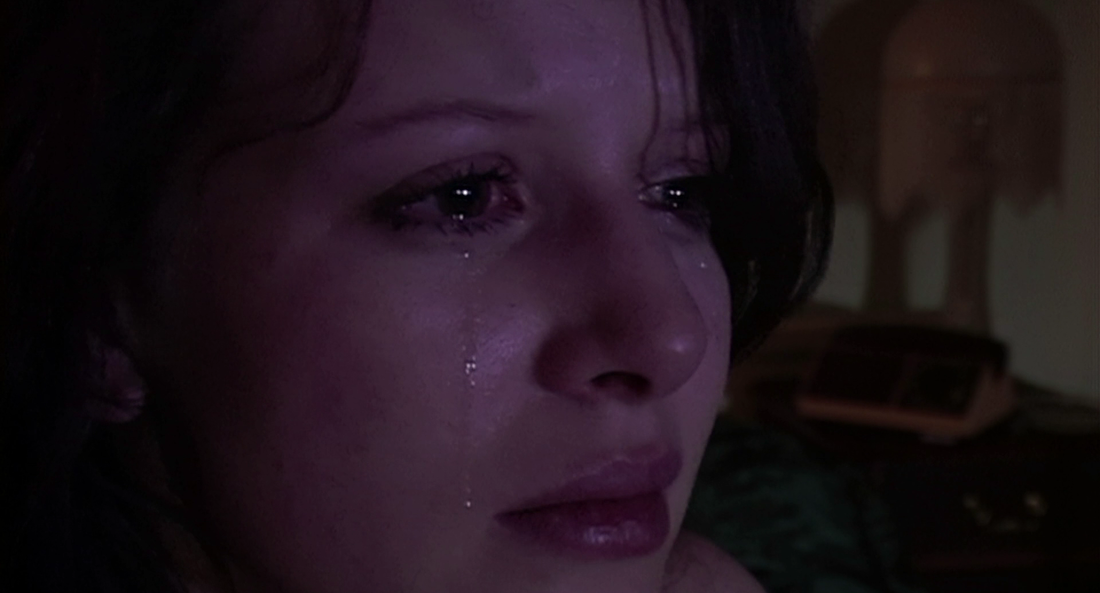 Tears as shouts of recognition. Goodbye. No, really, goodbye. Poulin-Denis keeps telling the audience the show is over, in so many different ways that it becomes comical, yet the audience doesn’t leave. This is still the show. When does it really end? What are the cues? When the stage lights fade out, when the house lights come on, when the performers take a bow, when we clap, when we leave the theatre, when we finally stop thinking about the show… Some shows never end. And, even when shows do end, what awaits us outside the theatre? More metaphorical blades. Theatre.
usine-c.com maydaydanse.ca My wish for the Montreal dance scene in 2013 is for Marie-Hélène Falcon to quit her job as artistic director of the Festival TransAmériques. I’m hoping she’ll become the director of a theatre so that the most memorable shows will be spread more evenly throughout the year instead of being all bunched up together in a few weeks at the end of spring. With that being said, here are the ten works that still resonated with me as 2012 came to an end. 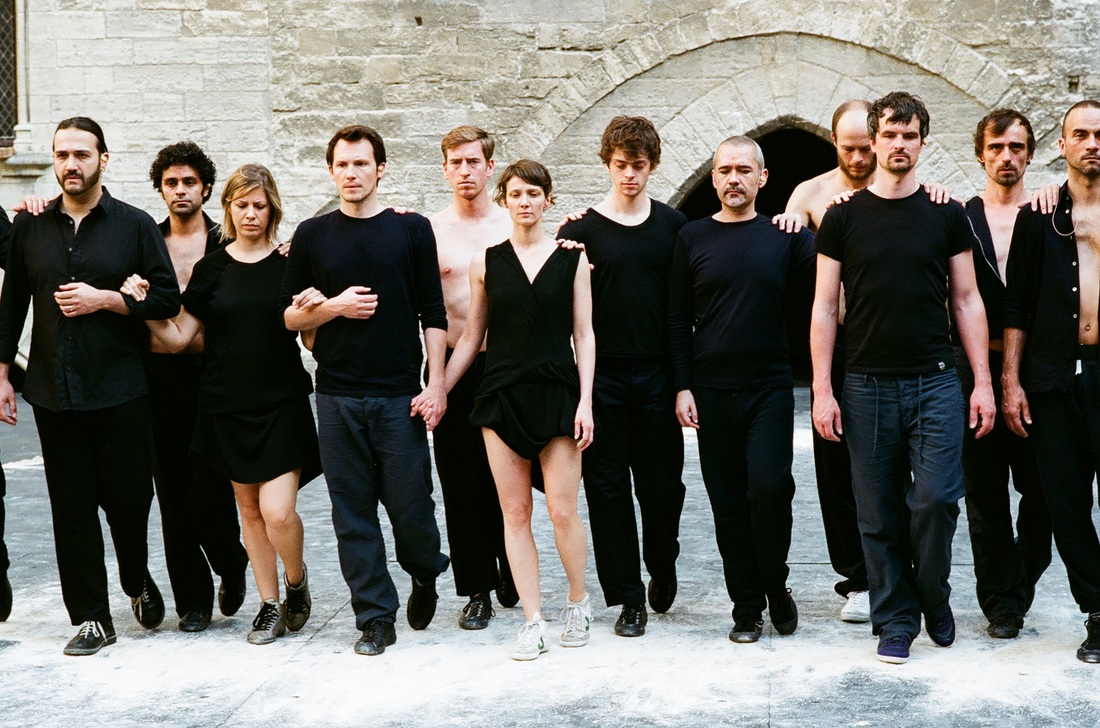 Cesena, a utopia for 19 performers, photo by Anne Van Aerschot 1. Cesena, Anne Teresa De Keersmaeker + Björn Schmelzer (Festival TransAmériques)
I’ve been thinking about utopias a lot this year. I’ve come to the conclusion that – since one man’s utopia is another’s dystopia – they can only be small in nature: one person or, if one is lucky, maybe two. With Cesena, Belgian choreographer Anne Teresa De Keersmaeker showed me that it could be done with as many as nineteen people, if only for two hours, if only in a space as big as a stage. Dancers and singers all danced and sang, independently of their presupposed roles, and sacrificed the ego’s strive for perfection for something better: the beauty of being in all its humanly imperfect manifestations. They supported each other (even more spiritually than physically) when they needed to and allowed each other the space to be individuals when a soul needed to speak itself. 2. Sideways Rain, Guilherme Botelho (Festival TransAmériques) I often speak of full commitment to one’s artistic ambitions as extrapolated from a clear and precise concept carried out to its own end. Nowhere was this more visible this year than in Botelho’s Sideways Rain, a show for which fourteen dancers (most) always moved from stage left to stage right in a never-ending loop of forward motion. More than a mere exercise, the choreography veered into the metaphorical, highlighting both the perpetual motion and ephemeral nature of human life, without forgetting the trace it inevitably leaves behind, even in that which is most inanimate. More importantly, it left an unusual trace in the body of the audience too, making it hard to even walk after the show. 3. (M)IMOSA: Twenty Looks or Paris Is Burning at the Judson Church (M), Cecilia Bengolea + François Chaignaud + Trajal Harrell + Marlene Monteiro Freitas (Festival TransAmériques) By mixing post-modern dance with queer performance, the four choreographer-dancers of (M)IMOSA offered a show that refreshingly flipped the bird to the usual conventions of the theatre. Instead of demanding silence and attention, they left all the house lights on and would even walk in the aisles during the show, looking for their accessories between or underneath audience members. Swaying between all-eyes-on-me performance and dancing without even really trying, as if they were alone in their bedroom, they showed that sometimes the best way to dramatize the space is by rejecting the sanctity of theatre altogether. 4. Goodbye, Mélanie Demers (Festival TransAmériques) Every time I think about Demers’s Goodbye (and it’s quite often), it’s always in conjunction with David Lynch’s Inland Empire. The two have a different feel, for sure, but they also do something quite similar. In Inland Empire, at times, an actor will perform an emotional scene, and Lynch will then reveal a camera filming them, as if to say, “It’s just a movie.” Similarly, in Goodbye, dancer Jacques Poulin-Denis can very well say, “This is not the show,” it still doesn’t prevent the audience from experiencing affect. Both works show the triviality of the concept of suspension of disbelief, that art does not affect us in spite of its artificiality, but because of it. 5. The Parcel Project, Jody Hegel + Jana Jevtovic (Usine C) One of the most satisfying days of dance I’ve had all year came as a bit of a surprise. Five young choreographers presented the result of their work after but a few weeks of residencies at Usine C. I caught three of the four works, all more invigorating than some of the excessively polished shows that some choreographers spend years on. It showed how much Montreal needs a venue for choreographers to experiment rather than just offer them a window once their work has been anesthetically packaged. The most memorable for me remains Hegel & Jevtovic’s The Parcel Project, which began with a surprisingly dynamic and humorous 20-minute lecture. The second half was an improvised dance performance, set to an arbitrarily selected pop record, which ended when the album was over, 34 minutes later. It was as if John Cage had decided to do dance instead of music. Despite its explanatory opening lecture, The Parcel Project was as hermetic as it was fascinating. 6. Spin, Rebecca Halls (Tangente) Halls took her hoop dancing to such a degree that she exceeded the obsession of the whirling dervish that was included in the same program as her, and carried it out to its inevitable end: exhaustion. 7. Untitled Conscious Project, Andrew Tay (Usine C) Also part of the residencies at Usine C, Tay produced some of his most mature work to date, without ever sacrificing his playfulness. 8. 1001/train/flower/night, Sarah Chase (Agora de la danse) Always, forever, Sarah Chase, the most charming choreographer in Canada, finding the most unlikely links between performers. She manages to make her “I have to take three boats to get to the island where I live in BC” and her “my dance studio is the beach in front of my house” spirit emerge even in the middle of the city. 9. Dark Sea, Dorian Nuskind-Oder + Simon Grenier-Poirier (Wants & Needs Danse/Studio 303) Choreographer Nuskind-Oder and her partner-in-crime Grenier-Poirier always manage to create everyday magic with simple means, orchestrating works that are as lovely as they are visually arresting. 10. Hora, Ohad Naharin (Danse Danse) A modern décor. The legs of classical ballet and the upper body of post-modern dance, synthesized by the athletic bodies of the performers of Batsheva. These clear constraints were able to give a coherent shape to Hora, one of Naharin’s most abstract works to date. Scrooge Moment of the Year Kiss & Cry, Michèle Anne De Mey + Jaco Van Dormael (Usine C) Speaking of excessively polished shows… La Presse, CIBL, Nightlife, Le Devoir, and everyone else seemingly loved Kiss & Cry. Everyone except me. To me, it felt like a block of butter dipped in sugar, deep fried, and served with an excessive dose of table syrup; not so much sweet as nauseating. It proved that there’s no point in having great means if you have nothing great to say. Cinema quickly ruined itself as an art form; now it apparently set out to ruin dance too. And I’m telling you this so that, if Kiss & Cry left you feeling dead on the inside, you’ll know you’re not alone. |
Sylvain Verstricht
has an MA in Film Studies and works in contemporary dance. His fiction has appeared in Headlight Anthology, Cactus Heart, and Birkensnake. s.verstricht [at] gmail [dot] com Categories
All
|
 RSS Feed